
Trout Spey Lines Explained: Skagit, Scandi, and Hybrid

Looking to master your trout spey setup but unsure which line is right for you? In this guide, we break down the three most popular types of trout spey lines—Skagit, Scandi, and Hybrid—to help you understand their key differences, when to use each one, and how to choose the best spey line for your trout fishing style. Whether you're swinging big streamers or delicate soft hackles, this comprehensive article from Big Sky Anglers will help you dial in your gear and catch more fish with confidence.
Trout Spey Line Setup Basics: Key Components Explained
A typical modern Trout Spey line system is made up of four parts connected by loops or knots.
- A floating Shooting Head (commonly referred to as a Spey line or head),
- A shooting or running line (which may be looped onto the head, or permanently connected to it from the manufacturer in an arrangement known as an “Integrated line”)
- A nylon or fluorocarbon leader/tippet.
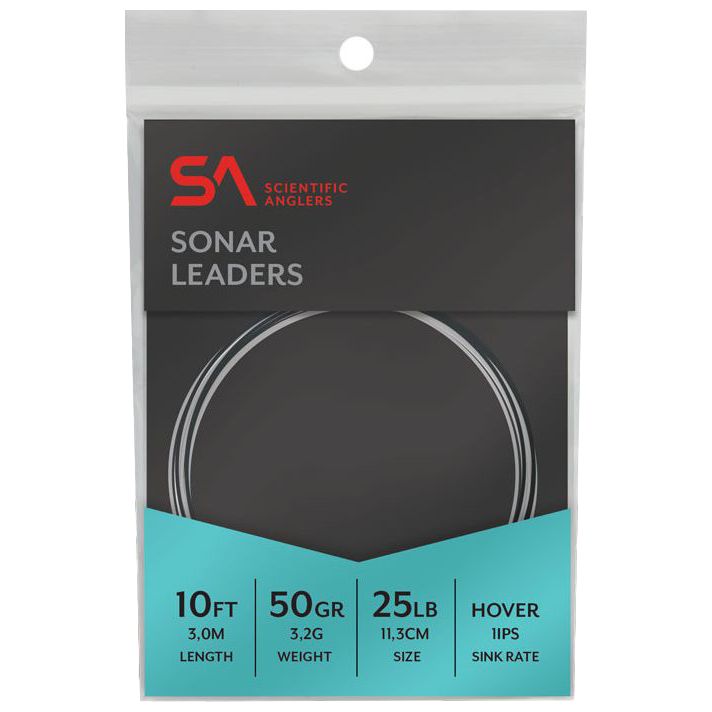
- And often, a floating or sinking tip (EG, RIO MOW Tips and Replacement Tips, Airflo FLO Tips and T Tips, or SA TC Tips) or coated tapered leader (EG, RIO Versileader, Airflo Polyleader, or SA Sonar Leader), depending on the style of Spey line being used.
These parts can be assembled into a wide range of combinations that allow an individual to tailor their line system to their own casting and fishing style, and the demands of the fishery.
The two most common line types for Trout Spey with either Double-Handed or Single-Handed rods are 1) a Skagit line, which is best for presenting larger flies like streamers on faster sinking tips, and 2) a Scandi line, which is best for presenting smaller and lighter flies on lighter sinking and floating leaders.
A third type of Spey line, which I call a “Hybrid” line (suggesting a cross between Skagit and Scandi) has become increasingly popular in recent years due to their casting ease with floating and sinking coated tapered leaders, and ability to deliver a variety of the most commonly used sizes of both small streamers and all wet flies without needing to switch between “true” Skagit and Scandi line systems.
In the following sections, I’m going to dig into some of the details of each of these types of Spey lines. The goal of this is to educate you so that you may more effectively select a type of Spey line for the style of fishing and casting you anticipate doing. If you are still left wondering what type of line or maybe which specific brand and model might work best for you, just reach out to me or one of the other Spey Nerds at Big Sky Anglers. We’re always happy to help.
Skagit Lines: The Best Choice for Big Flies and Sinking Tips
The name Skagit, pronounced ska·jit, comes from the Skagit River in Washington State, where a clever gang of anglers developed this type of lines to improve their ability to cast big, often heavy winter steelhead flies on heavy sinking tips. Of course, the Skagit River is named for a group of native people who made the Pacific Northwest and the aptly named river valley their home.
Key Features of Skagit Lines
Skagit lines are best for presenting larger flies like streamers on heavy, fast sinking tips. There are several key features of a Skagit head that make it well suited for this application.
- Skagit lines are relatively short compared to the other categories of Spey lines. For Trout Spey, most Skagit heads are between 12 and 20 feet in length and weight between 150 and 375 grains. By concentrating the entire mass of the head into a shorter length, the ability of the line to “turn over” bigger, heavier flies and sinking tips is maximized.
- Skagit lines have relatively short “front tapers” compared to the other categories of Spey lines. The short front taper maximizes energy transfer rate from the thicker, heavier belly to the sinking tip, again helping to maximize the ability of the line to “turn over” bigger, heavier flies and sinking tips.
- Skagit lines have heavier (measured in grains per foot of line) front ends compared to the other categories of Spey lines. If you want to easily turn over a sinking tip that weighs 8 grains per foot (IE, RIO Light MOW Tips, or Aiflo T-8 FLO Tips) then the front end of your Skagit line needs to weigh more than 8 grains per foot. It takes mass to move mass.

When to Use a Skagit Line for Trout Spey
If that seems a bit too techy for you, just remember the takeaway here is that Skagit lines are designed to cast heavy sinking tips and larger flies with relative ease. So, if your idea of a good time is hucking streamers like Zonkers, Sculp-Zillas, MK’s Swing Mints, Fortune Cookies, Mattioli’s Trout Spey Buggers, CD’s Swing Delights, or Skiddish Smolts on T8 or even heavier sinking tips, then a Skagit system is for you. Just remember, if you get a Skagit line, a sinking tip, sinking tapered coated leader, or Skagit-specific floating tip is mandatory to make this system cast and fish correctly. It is also worth mentioning that a Skagit line system will be able to cast small, light flies like sot hackles and mini, unweighted streamers. What it will not do is deliver them very smoothly, with any significant degree of grace or stealth. It will slap them out there and get you fishing, though. As such, a Skagit line is perhaps the easiest and quickest way to “get fishing”.
If you are looking for smoothness, grace, and improved stealth a Scandi or Hybrid line may be what you are after.
Popular Skagit Line Examples for Trout Spey
- RIO Elite Skagit Max Power and Mini Max Power Shooting Head (225gr /16ft through 375gr / 19ft)
- RIO Elite Integrated Skagit Max Power and Integrated Mini Max Power Line (225gr / 16ft through 375gr / 19ft) – This is the same as the line above but with an attached shooting line.
- SA Spey Lite Skagit Head (180gr / 11ft through 420gr / 21ft)
- SA Spey Lite Integrated Skagit Line (180gr / 11ft through 420gr / 21ft) – This is the same as the line above but with an attached shooting line.
- Airflo Superflo Max Scout (180gr / 14.4ft through 390gr / 16.5ft)
- OPST Commando Head (150gr / 12ft through 375gr /15ft)
Scandi Lines: Smooth Presentations for Lighter Flies
As you may have already guessed, Scandi lines are so named because many of the concepts and casting techniques associated with this style of shooting head Spey line were developed on the Atlantic salmon rivers of the Scandinavian countries.
Key Features of Scandi Lines
Scandi (short for Scandinavian) lines are best for smoothly presenting smaller and lighter flies on tapered monofilament leaders and light sinking coated tapered leaders. There are several key features of a Scandi line that make it well suited for this application.
- Scandi lines are generally longer than to the other categories of Trout Spey lines. For Trout Spey, most Scandi heads are between 20 and 32 feet in length and weight between 150 and 375 grains. Spreading out the mass of the line over a longer length and concentrating more mass toward the rear end of the line gives these lines a much smoother, graceful delivery that relies more on line-speed than line weight. The focus is to deliver small/light flies like soft hackles delicately.
- Scandi lines have relatively long “front tapers” compared to the other categories of Spey lines. The long front taper smooths out the energy transfer rate from the thicker, heavier belly to the leader. With this smoothness comes a more graceful, beautiful cast, but also a decrease in the lines ability to turn over big, heavy flies and sinking tips.
- Scandi lines have light (measured in grains per foot of line) front ends compared to the other categories of Spey lines. These lines are designed to turn over long (on the range of 10-16 ft) tapered mono leaders or the lightest of the coated tapered leaders (EG RIO Trout Versi Leaders).

When to Use a Scandi Line for Trout Spey
Again, the takeaway here is that Scandi lines are best for smoothly presenting smaller and lighter flies on lighter sinking and floating leaders. If you open your fly box when you get to the picnic table at Barns Hole #2 and are greeted by rows upon rows of sparse, finely crafted wet flies, with maybe a couple of rows dressed with beads for extra weight, then a Scandi line is probably what you want.
Scandi lines are also great lines to practice your Spey casting with because they require a more consistent execution of Spey casting fundamentals to cast well compared to Skagit lines. Don’t get spooked by this, though. It’s not impossible, or even that hard to cast and fish a Scandi line, and we see lot of folks out there enjoying the process of Spey fishing as well as getting better at their casting as a result. It’s all part of the fun.
A final bit of advice here is that leader selection is vitally important in the creation of a smooth casting Scandi system. The safest and simplest leader system is a long, tapered monofilament leader designed specifically for Spey applications. Light, coated tapered leaders (EG Rio Trout Versi Leaders) are also an option. With a large variety in tapers among the various line brands and models, I unfortunately don’t have room here to address all the best combinations. That said, if you need advice dialing in your leader system for your Scandi heads, don’t hesitate to reach out.
Popular Scandi Line Examples for Trout Spey
- RIO Elite Scandi Launch (320gr / 32ft)
- SA Spey Lite Scandi Head (180 grains / 20ft through 420gr / 27ft)
- Spey Lite Integrated Scandi Line (180 grains / 20ft through 420gr / 27ft) – This is the same as the line above but with an attached shooting line.
- Airflo Superflo Max Scandi Compact (300 & 330 gr / 29ft)
Hybrid Lines: Versatile Options for Balanced Trout Spey Fishing
The lines in this third category are often lumped, I believe incorrectly, with the Scandi lines, mainly for the sake of simplicity. Unfortunately, calling these unique fishing tools “Scandi lines” simply on the grounds that they are not designed to cast big flies and heavy sink tips sell them short on what they are indeed capable of. I also think that many Trout Spey anglers overlook the great utility and versatility of these lines when they are lumped into the Scandi category. So, what are the so-called Hybrid lines good for, and why?
Key Features of Hybrid Lines
Hybrid Lines blend some of the features of Skagit and Scandi lines and are designed to be versatile and able to smoothly present the most common sizes and weights of flies and floating/sinking leaders used for typical trout Spey angling. There are several key features of a Hybrid Trout Spey line that make it well suited for this application.
- Hybrid lines are typically longer than Skagit lines and shorter than or similar in length to Scandi lines. For Trout Spey, most Hybrid lines are between 22 and 28 feet in length and weight between 150 and 350 grains.
- Hybrid lines have “front tapers” that are shorter than Scandi lines and longer than Skagit lines. The idea behind this is to provide an abrupt enough energy transfer from the thicker, heavier belly to end of the line such that it is able to turn over somewhat larger flies and heavier coated tapered leaders (of various float/sink rates) more like a Skagit, while maintaining most of the casting grace and smooth delivery of a Scandi line.
- Hybrid lines have lighter (measured in grains per foot of line) front ends than Skagit lines and heavier front ends than most Scandi lines. Remember that mass moves mass. A Hybrid head typically doesn’t have enough mass at the tip to effectively turn over heavier sink tips like T8, but it does generally have more mass than a true Scandi line which is only designed to turn over tapered monofilament leaders or the lightest of the coated tapered leaders. The Hybrid lines excel at turning over some of the fishiest coated tapered leaders we know (EG, RIO Medium Versileaders and SA Sonar Leaders) allowing us to present small and medium sized flies throughout the water column while retaining much of that smooth casting feel and delicate delivery of Scandi lines.

When to Use a Hybrid Spey Line
The takeaway here is that Hybrid lines are designed to be versatile and able to cleanly present the most common sizes and weights of flies and sinking leaders used for typical trout Spey angling by borrowing features from both Skagit and Scandi style lines. If you primarily fish unweighted and weighted wet flies like Chest Candys, Lucky Bucky’s, and Hartwick’s Redrum Bug, and small to medium streamers like Keith’s Mini Stinger, BH Woolly Buggers, and Simi Seal Leeches, but like having the utility to fish them deeper using some of the heavier types of coated tapered sinking leaders, then these lines are worth checking out. If you feel like Skagit heads are just too short, powerful, and abrupt for your liking when swinging smaller flies, but Scandi lines lack the turnover power needed to deliver the weighted wet flies you love, then the Hybrid lines might be for you.
Lastly, using coated tapered leaders is critical if your goal is creating a smooth casting and effective fishing Hybrid line system. These lines are perfectly suited to casting coated tapered leaders (either floating or various sink rates) as it smooths out their turnover. With tapered monofilament leaders, it’s common for these lines to feel “slappy” or unnecessarily “clunky”. Fortunately, there is a terrific number of options regarding lengths and sink rates of coated tapered leaders. Unfortunately, I don’t have room here to address all the best combinations. That said, If you need advice selecting the right coated tapered leader for your Hybrid Spey line, don’t hesitate to reach out.
Popular Hybrid Line Examples for Trout Spey
- RIO Elite Trout Spey Shooting Head (190 through 350gr / 23ft)
- RIO Elite Integrated Trout Spey (230 through 350gr / 23ft) – This is the same as the line above but with an attached shooting line.
- Airflo Superflo Max Rage Compact (180 gr / 26.25ft through 360gr / 28ft)
Trout Spey Line Summary: Which Line is Right for You?
Hopefully you’ve found this little article both interesting and informative. I know I dove into some fairly advanced concepts related to line tapers and design, which can be somewhat intimidating. In the end, that stuff is really only important if you are interested in it. What is critical for all Trout Spey anglers is to remember when and why you might want to use either a Skagit Line, a Scandi Line, or a Hybrid Line. So, I want to finish off here by reiterating the three key takeaway points and including a graphic showing all the types of lines together, for reference. Feel free to reach out if you have questions or comments, we love to hear from you. Otherwise, I hope to see you on the river.
- Skagit (named after the river in Washington) lines are best for presenting larger flies like streamers on heavy, fast sinking tips.
- Scandi (short for Scandinavian) lines are best for smoothly presenting smaller and lighter flies on tapered monofilament leaders and light sinking coated tapered leaders.
- Hybrid Lines blend some of the features of Skagit and Scandi lines and are designed to be very versatile and able to smoothly present the most common sizes and weights of flies and coated tapered leaders used for typical Trout Spey angling.